Overview of Energy Solutions with Li-ION Technology

Lithium Ion Technology Has Been in Our Lives Since 1970s
Although lithium-ion technology is new in industrial areas, the rechargeable lithium battery cell was manufactured in the 1970s. It has been used in aerospace and aviation, mobile phones, and automotive industry, respectively, and then started to be used in industrial equipments in recent years. With the development of this technology over the years, lithium-ion batteries are also used in the fields of intralogistic and material handling.
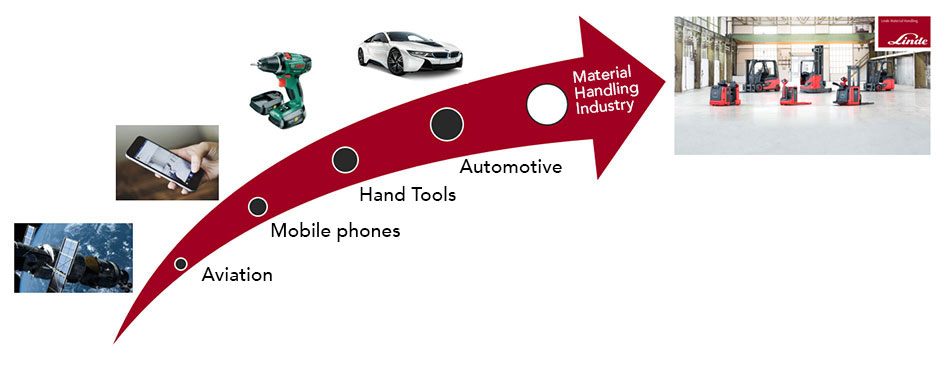
Lithium Ion Technology Has Been in Our Lives Since 1970s
Advantages of Lithium-Ion Batteries Compared to Traction Batteries
Being used in the fields of intralogistic and material handling for approximately 10 years, lithium ion batteries ensure that operations are more efficient and safe. To give an example of this;
• Efficiency is ensured in the operation by means of the intermediate charges that can be performed during the operation. Short charges during breaks and multi-shift changes ensure that the equipment stays active on the site at all times, while keeping the life of its battery. Compared to traction batteries, the good condition of the battery is supported by intermediate charges in lithium-ion technology and approximately 4 times longer battery life is provided.
• Since traction batteries work with conventional technology, it takes at least 3 times longer to fully charge than similar lithium-ion batteries. Therefore, operations with equipments that use traction batteries may be interrupted frequently.
• Along with this, some possible safety risks may be encountered when removing the heavy battery from the equipment and inserting another battery. In addition to this, toxic gases are released due to the chemical reaction of a charging battery, and the charging area must be separate from the working area. Lithium ion batteries do not emit a gas during charging and can be charged in a short time without being removed from the equipment.
In this manner, the use of lithium-ion batteries in operation increases operational safety and efficiency.

Not Every Lithium-Ion Battery Is the Same.
The component in which energy is stored in lithium-ion batteries that are used in material handling equipments can be produced by using several different components. These components contain advantages and disadvantages compared to each other. Particularly NMC (Nickel manganese cobalt) cell component contains more intrinsic energy than LFP (Lithium ferrophosphate). While this specification allows to deliver energy to the points where more energy is required, it enables the meeting of the requirements and working longer with a battery that has a lower capacity (Ah). Considering this requirement, LINDE MH uses NMC cell components in high energy material handling equipment.
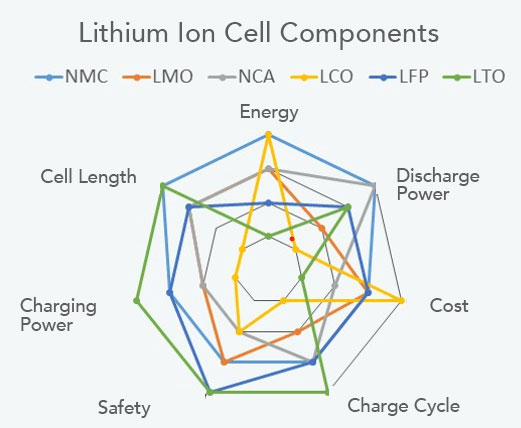
You Can Get Information About the Energy Solutions of LINDE MH from HASEL
As the solution partner of LINDE MH in Türkiye for more than 25 years, HASEL reviews the energy solutions mentioned and conveys the most appropriate and correct solutions to the users. With the lithium-ion technology that LINDE MH has been offering to the intralogistic industry for a while, it provides advantages in many points from the speed of the customer operations, to the safety and the energy that they consume. HASEL is able to determine the appropriate equipment and the right lithium ion technology for your operation and make your operation efficient and safe with its experienced team. You can contact HASEL at 0850 555 00 44 or via hasel-linde-mh.com address to get more detailed information about lithium-ion technology and to receive an appropriate solution for your process.
